Why choose a crop sensor Nikon DX camera?

Small, nimble, budget-friendly and filled with top tech: the APS-C Nikon provides plenty of great reasons to make it your go-to camera for stills and video
When it comes to sensor size, bigger isn’t always necessarily better. Nikon full-frame (FX) or crop sensor (DX) cameras will both deliver fantastic results and boost your creativity in stills and video. The important thing is to find the gear that will suit your style, your needs and your budget. For example, if you travel a lot and want light, minimal gear, DX might be for you. Similarly, if you love street photography, a smaller DX might look less obtrusive and intimidating to your subjects. Or perhaps you’re a budding content creator who wants the full control and image quality of a real camera but without a big outlay.
Let’s take a look at some of the advantages of delving into the crop sensor world and discover that, for many reasons, small is beautiful.
Budget
DX cameras are often less expensive than full frame, but they’re still loaded with advanced Nikon technology. This makes them a great way to get the latest camera features at a much reduced cost. The Nikon Z50II, for example, has features inherited from more advanced cameras, but in a much more pocket-friendly package.
Lenses
Some Z mount lenses are designed specifically for DX cameras, such as the NIKKOR Z DX 16-50mm f/2.8 VR and the NIKKOR Z DX MC 35mm f/1.7, and are generally smaller and lighter than their full-frame counterparts. But you can put any Z mount lens on a Nikon DX camera (and also use a huge array of classic F mount lenses via the FTZII adapter). Check out our guide to some of the best lenses for your Nikon DX camera here.

What’s in our kitbag?


Same lens, different sensor sizes. On the left a 50mm lens on a full frame Nikon Z 6II and on the right the same lens on a crop sensor Nikon Z fc.

Reach
The 1.5x crop means images look closer than if they were taken on a full-frame camera. For example, an image taken with a 50mm lens on a DX camera will look more like it was taken with a 75mm lens. This is great for things such as wildlife, where a smaller 300mm lens will take images with a field of view equivalent to a 450mm lens on full frame.
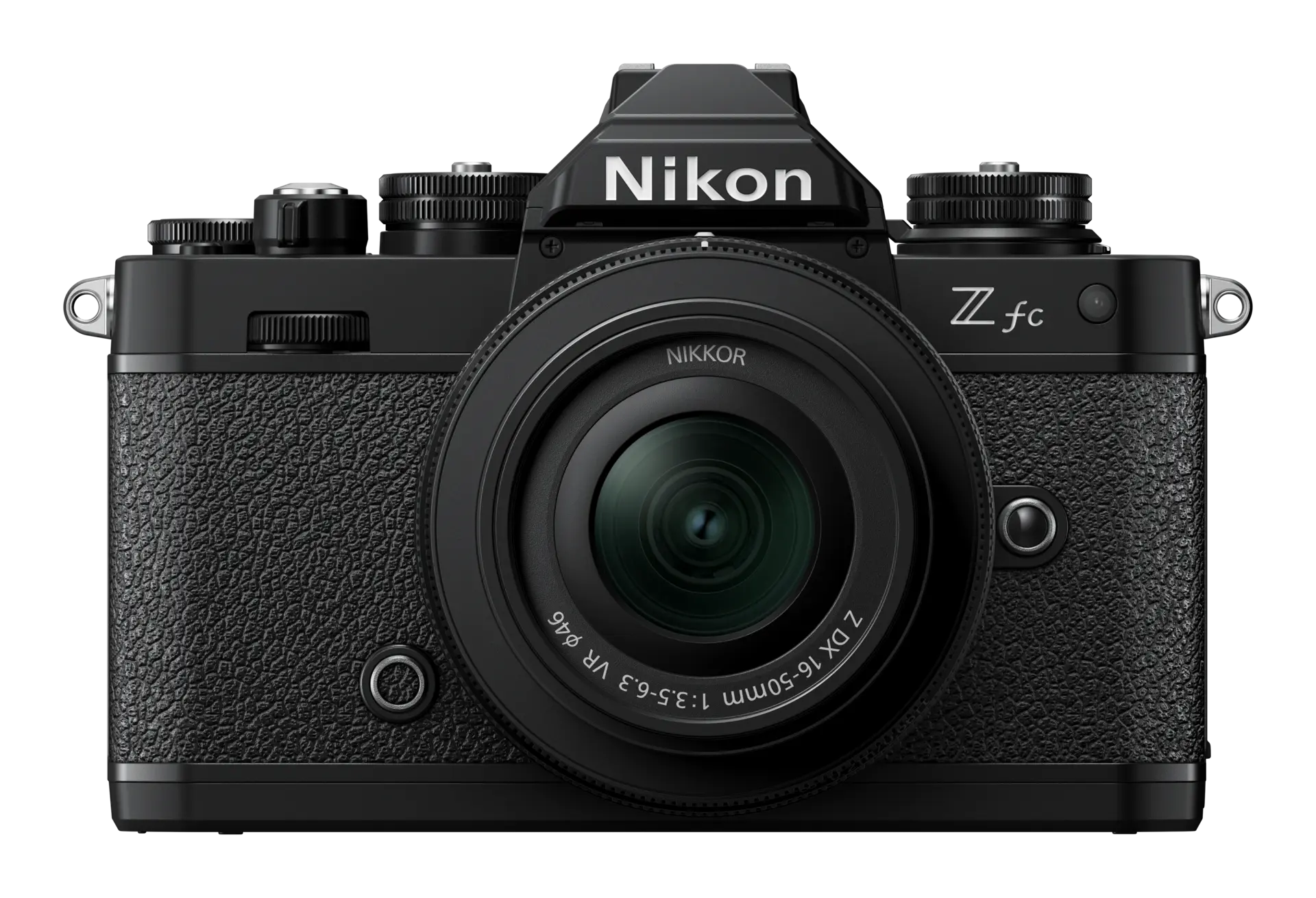
A smaller sensor can mean a smaller camera, such as here with the Nikon Z fc

Agility
It’s not just the sensor that’s smaller in a DX camera – the body can be too. That means a smaller and lighter set-up, which is advantageous in a host of scenarios. DX cameras are perfect for travel when packing space is tight and you don’t want to carry a lot of heavy gear around all day. They’re great for staying unobtrusive for street photography for example, and are superb for handheld video, where the lack of weight helps you hold the camera still.
Great for video
Don’t be fooled into thinking full frame is the only sensor for video. The sensor on Nikon DX cameras is almost identical in size to the Super 35 sensor in many professional cinema cameras, such as the RED KOMODO, so you’re in good company.
Which to choose
Nikon Z50II. © Antonia Thomsen

Nikon Z50II: The all-rounder’s choice, with great tech specs, Expeed 7 processor and a familiar look and feel.
Nikon Z fc. © Conor McDonnell

Nikon Z fc: Cool retro vibes on the outside, great tech on the inside. Available in different colours to match your style. A street favourite.
Nikon Z 30. © Morinone

Nikon Z 30: Made for the vlogger who likes to keep things mobile. Creates pro-level footage with superb sound.
Uncover DX lenses


'%3e %3ccircle cx='453' cy='453' r='263' fill='%23FFDD00'/%3e %3c/g%3e %3cdefs%3e %3cfilter id='filter0_df_5839_100698' x='0' y='0' width='906' height='906' filterUnits='userSpaceOnUse' color-interpolation-filters='sRGB'%3e %3cfeFlood flood-opacity='0' result='BackgroundImageFix'/%3e %3cfeColorMatrix in='SourceAlpha' type='matrix' values='0 0 0 0 0 0 0 0 0 0 0 0 0 0 0 0 0 0 127 0' result='hardAlpha'/%3e %3cfeOffset dy='1.66516'/%3e %3cfeGaussianBlur stdDeviation='0.832579'/%3e %3cfeComposite in2='hardAlpha' operator='out'/%3e %3cfeColorMatrix type='matrix' values='0 0 0 0 0 0 0 0 0 0 0 0 0 0 0 0 0 0 0.25 0'/%3e %3cfeBlend mode='normal' in2='BackgroundImageFix' result='effect1_dropShadow_5839_100698'/%3e %3cfeBlend mode='normal' in='SourceGraphic' in2='effect1_dropShadow_5839_100698' result='shape'/%3e %3cfeGaussianBlur stdDeviation='95' result='effect2_foregroundBlur_5839_100698'/%3e %3c/filter%3e %3c/defs%3e %3c/svg%3e)

New to Nikon?


For limitless creativity